Rules and regulations for allotment plots
Last revised 26th January 2026

Last Revised: 26th January 2026
These rules define plot holder requirements and serve as the basis for the committee in resolving disputes or enforcing eviction. Pre-existing arrangements are unaffected until structures are replaced or a new tenant takes over, except in the case of dangerous items. The Committee's decision on disputes is final.
This document also references the Constitution, Equality policy, and Safeguarding policy, which all members must follow.
These rules supersede any version you may have been issued with previously, be that digitally or printed.
If any rule is unclear please ask Steward or committee member for clarification.
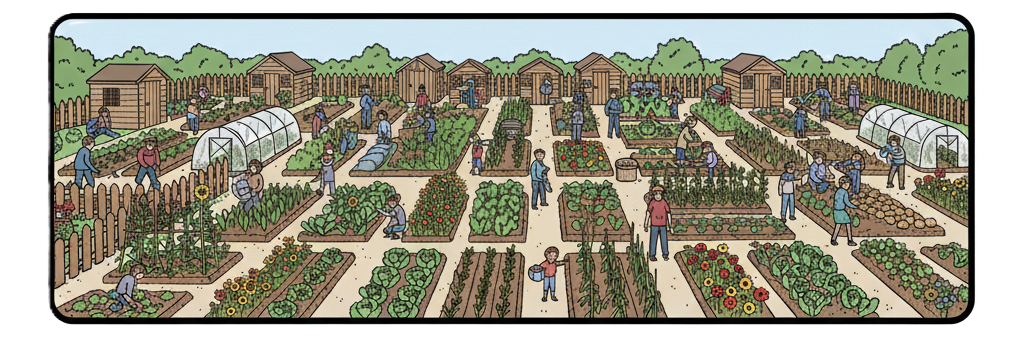
Tenant's Allotment Responsibilities:
This is an exec summary of the rules. Tenants should be familiar with the full rule-set but the below are the ones typically forgotten/broken most often.
- Display your plot number clearly at the front, facing the main path.
- Keep your plot fully cultivated and free from weeds and grass year-round.
- Maintain neat, tidy, and safe plot borders and pathways.
- Do not obstruct any access pathway.
- Structures, fencing, or netting must be set back at least 30cm (12") from the path to allow maintenance.
- Bonfires/incinerator bins are permitted 1st November to 31st March, Tuesdays, Thursdays, & Saturdays only, from sunrise to sunset.
a. Bonfires/incinerator bins must be attended and extinguished before nightfall.
b. Place them away from neighbours, trees, hedges, boundaries, sheds, greenhouses, or any other structure, and prevent smoke from blowing onto neighbouring properties.
c. Do not burn damp waste, oily rags, plastic, rubber, or foam.
d. Only burn weeds that cannot be composted. - Do not store rubbish; remove all rubbish and non-compostable material promptly.
- Written Secretary/Stewards' consent is required before planting any tree; they must be M27 dwarf stock, sited at least 90cm (3') from paths/boundaries, pruned, maintained, and removed upon vacating the plot.
- No spraying of weedkiller or chemicals; use direct applications only.
- Maintain a clear 90cm (3') pathway between your plot and any boundary hedge.
- All structures (e.g., sheds, polytunnel, greenhouse, pergola) must be safe and useable. Stewards' approval is required for permanent structures.
- New glass structures are prohibited.
- Only watering cans may be filled from water troughs; no hosepipes or large containers.
- Carpet or underlay is not allowed; plastic sheeting may be used for weed suppression.
- Children must be supervised and dogs kept on a lead at all times.
- No parking at Soundwell site. Downend site parking only permitted in designated areas.
- Livestock is not allowed on plots.
- Always lock the site - never share key/key codes with non-tenants/members
- The Secretary reserves the right to evict plot holders whose plots are unsatisfactory.
- Notify us promptly of any changes to your details or circumstances.
1. Allotment plot letting
- A. An allotment Tenancy Agreement Form must be completed, signed, and submitted to the Secretary and Treasurer via the Steward. Stewards will use waiting lists to offer available plots, prioritising the first person on the list for their requested size or the next available size. Applicants can stay on the list until offered their desired plot size, but refusing a valid offer will result in being moved to the end of the list or, in exceptional cases, removed entirely.
- B. Allotment tenancies will only be granted to residents, 18 years or over, who reside within the County and District of South Gloucestershire. Exemptions may be made at discretion of Lead Stewards and Secretary.
- C. Stewards may inspect any allotment site without notice to ensure plots adhere to these rules.
- D. All tenants must sign a Tenancy Agreement Form and comply with these rules. Plot access is granted upon signature and payment.
- E. The tenant shall ensure that any change of address or contact details are notified as soon as reasonably practicable to the Secretary at ssallotmentsecretaries@gmail.com or appropriate Steward. Staple Hill & District Allotment Allotments Ltd shall not be held responsible for any losses resulting from a failure by a tenant to provide information.
- F. Existing tenants seeking an additional plot must submit a new application to the Secretary (directly or via the Steward) and will be added to the end of the waiting list.
- G. Any applicant who accepts a smaller allotment plot than originally requested will be removed from the waiting list. Should the tenant wish a larger plot at a later date, a new application must be submitted to join the waiting list.
- H. Where a person (or joint applicant) who has had an allotment tenancy previously terminated by the Committee makes an application for an allotment tenancy it shall be considered taking into account the circumstances of the previous termination and any Regulation that may apply at that time.
- I. Tenants may not sublet or share their plot, except with an registered Helper. Joint tenancies are permitted, with the first applicant designated as the Lead Tenant. All regular helpers must be registered to receive essential information and notices. Tenants are responsible for the behaviour and actions of all helpers.
- a. Helpers: Anyone who regularly helps on your allotment plot must be notified to the Secretary at ssallotmentsecretaries@gmail.com so they can be added to mailing list and kept abreast of essential information for news, security and safety purposes.
- b. Children: Do not need to be registered but must be supervised by a responsible adult at all times.
- c. Temporary Helpers: Do not need to be registered (e.g., holiday cover)
- J. If an allotment tenancy is terminated, there will be no refund made other than for the refundable deposit dependent upon the condition of the plot and the decision of the Steward will be final in this respect. Compensation will not be given for any crops, structures or personal items if not taken by the plot holder at the time of vacating.
- K. The first named person on joint applications shall be considered the lead applicant. Should the lead applicant withdraw, the second named applicant will remain on the waiting list unless advised in writing that both wish to withdraw.
- L. Helpers are required to register with the Secretary and agree to abide by the rules of the allotment. Helpers are not entitled to vote at AGM - this is only offered to Tenants. Helpers will have the opportunity to apply for the tenancy of the plot should the tenant vacate.
- M. Upon a tenant's death, the plot can be offered to any immediate family member and known helpers.
2. Charges
- A. Annual allotment rent (including water charges) is due on 1st September for Soundwell and 1st October for Downend. The Treasurer sets and the Membership agrees on the combined annual rent and water charges at the AGM, covering the following year only.
- B. If rent and water charges are not paid within 30 days of the due date, it will be considered an intention to surrender the allotment tenancy. If payment remains outstanding 14 days after the initial 30 days, the Committee is entitled to enter the plot, remove all items and structures, and re-let the plot.
- C. Changes to circumstances that affect your ability to pay, must be advised in writing to the Treasurer on ssallotmentfinance@gmail.com. The Committee will review specific circumstances and offer support and guidance.
- D. Annual rental and any other charges that may be payable are subject to annual review and Tenants will be notified of any increase in advance. To cover costs, charges will be based on a rate per perch.
- E. A tenant shall notify the Steward of any lost / stolen keys. Replacement keys are chargeable and shall not be issued to a tenant until paid in full.
- F. Concessions (where available) are only applicable to the lead tenant.
- G. Lead tenants shall only be changed where written proof is provided that the lead tenant is deceased or permanently infirm.
- 3. Allotment plot management
- A. Tenants must keep their allotment plots clean and tidy year-round, to the standard set by the Committee's discretion. Stewards will inspect sites regularly throughout the year.
- B. All Tenants must clearly display their plot number at the front of their plot facing out towards the main pathways
- C. An allotment plot must be used for the sole purpose of growing vegetables, fruit, flowers and other produce and tenants may not sell their produce commercially (other than for charitable purposes). At least 75% of individual allotment plots should be used for growing purposes.
3. Allotment plot management
- A. Tenants must keep their allotment plots clean and tidy year-round, to the standard set by the Committee's discretion. Stewards will inspect sites regularly throughout the year.
- B. All Tenants must clearly display their plot number at the front of their plot facing out towards the main pathways
- C. An allotment plot must be used for the sole purpose of growing vegetables, fruit, flowers and other produce and tenants may not sell their produce commercially (other than for charitable purposes). At least 75% of individual allotment plots should be used for growing purposes.
D. Weeds and chemicals
- All tenants are responsible for ensuring that weed growth is controlled and allotment plots are cultivated.
- a. Direct application weed killer may be used carefully but you are not allowed to use spraying methods which contaminate neighbouring plots
Stewards may use spraying methods on occasion - b. Plastic sheeting can be used temporarily to suppress weeds.
- c. Carpet or underlay is prohibited on allotments.
- d. Grass is a potential weed if left to seed; mow grassy areas regularly.
- e. Plot holders must not undertake any activity that adversely affects other plots, such as spray damage, fertiliser run-off, or spreading weeds.
- f. The use of banned pesticides or substances is prohibited, and it is the plot holder's responsibility to remain compliant with current laws.
E. A tenant shall be responsible for ensuring that appropriate pest and disease control is carried out on the allotment plot.
F. Pathways
Tenants are responsible for keeping boundaries and adjacent paths clean and tidy. Where a path borders two plots, the tenants must agree on how to keep it clear of weeds and obstructions. At a minimum, you are responsible for the path to the right of your plot (on Downend, this is when facing from the road).
- a. Empty Plot Maintenance: Tenants are encouraged to help stewards maintain paths and empty plots (all committee roles are voluntary).
- b. Plot Pathways: Keep pathways between plots (approx. 45cm/18" wide) clear of crops, weeds, tools, and rubbish.
- c. Structures near Paths: Do not erect buildings, fencing, or netting within 30cm (12") of a path to prevent obstruction and trip hazards.
- d. Boundary Hedges: Maintain a clear 90cm (3ft) pathway between your plot and any boundary hedge.
- e. Access Pathways: Do not block any access pathway.
- f. Plot Paths and Trespassing: Tenants may make paths within their plot; others must use main pathways and not trespass on neighbour plots without agreement.
- g. Children and Pets: Children and pets are not allowed on other plots.
G. Trees and bushes
- a. Trees: Require prior written consent from the Secretary/Stewards. Must be sited at least 90cm (3') from paths/boundaries and positioned to avoid shading neighbours.
- b. Fruit bushes: Permitted.
- c. Fruit trees: Must be M27 dwarf stock and regularly pruned for shape and vigour.
- d. Tree removal: Trees must be removed upon vacating the plot unless agreed with the Secretary/Stewards.
- e. Maintenance: Tenants must control all bushes and trees to prevent suckers/vigorous growth/shade affecting neighbouring plots.
- f. Boundary hedges: Not permitted.
H. Tenants are responsible for property (including crops and structures) on their individual plots. The Council and/or Committee are not liable for incidents or damage.
I. Fires
Bonfires/incinerator bins are restricted to the period from 1st November until 31st March Tuesday, Thursday & Saturdays from sunrise to sunset only.
- a. Bonfires/incinerator bins must never be left unattended nor allowed to burn or smoulder overnight.
- b. Any bonfires/incinerator must be placed away from neighbours plots, trees, hedges, boundary fencing, sheds, greenhouses or any other structure and not allowed to blow across neighbouring properties of the allotment site
- c. Do not burn damp grass/garden waste, oily rags, plastic, rubber or foam
- d. Only burn weeds that CANNOT be composted.
J. Ponds
Ponds are allowed with Lead Steward agreement.
- a. Ponds must be fenced/signposted for safety, and include shallow areas for wildlife escape.
- b. Use only suitable pondliner or manufactured kits; no baths, sinks, barrels, buckets, or non-aquatic materials.
- c. Ponds must be maintained and not allowed to infill. Decommissioned ponds require removal of non-biodegradable materials and safe relocation of wildlife.
- d. Do not fill ponds from water troughs; use natural rain or your own harvested water.
K. Watering and water troughs
- a. Hosepipes are not permitted to be connected to water troughs
- b. Tenants may fill water butts from troughs with watering cans, but only during quiet hours.
- c. Water filled wheel barrows must not be used to empty water onto your plot
- d. Small scale drip irrigation systems are allowed within polytunnels and greenhouses providing they are not using excessive water
- e. Tenants are encouraged to harvest water within their allotment plots to supplement mains water provision where provided.
- f. It is not permitted to install additional water taps or modify troughs in any way
- g. It is not permitted to use the water troughs for the cleaning of tools, washing of hands or cleaning produce.
L. Waste / Rubbish
- a. Tenants are responsible for the removal of all waste lawfully
- b. Tyres are not permitted to be brought on to the Allotments
- c. A tenant must not allow his/her allotment plot to be used for the storage of glass, carpet, timber, sinks, baths, vehicle tyres, refuse or any other material deemed unsuitable by the Committee
- d. Tenants must remove all rubbish and non-compostable material from their plot as soon as possible and must not bring bring rubbish to their allotment plot
- e. Upcycling is encouraged but baths, toilets, old fridges, etc are not suitable or allowed
- f. Bottles used to store dangerous chemicals and products must be disposed of safely g. Composting of biodegradable materials is encouraged
- h. Fly-tipping of any kind will not be tolerated and could lead to eviction
- i. Pets nor wildlife cannot be buried on site; seek advice if unsure
M. Parking
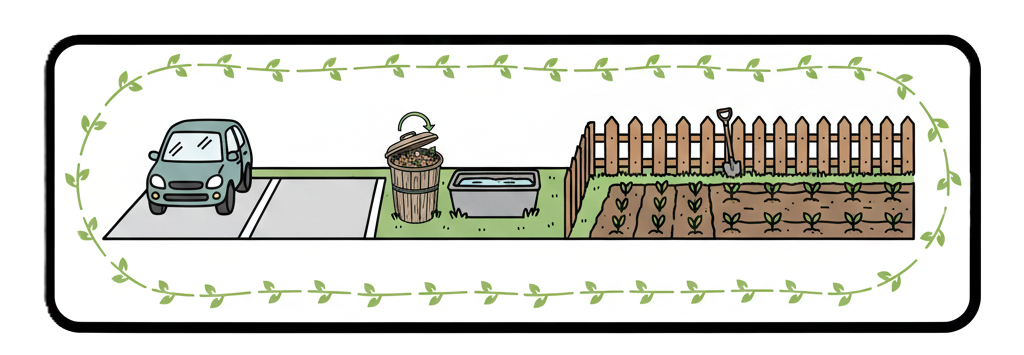
Parking is not permitted on the Soundwell site.
Parking on the Downend site is permitted.
- a. Limited shared parking is available on a first-come, first-served basis, located just inside the gate, by the shop, and at the top of the hill beyond the shop. All other spaces are private.
- b. Parking spaces created by tenants next to the road belong to the plot holder and require their prior permission for use.
- c. Be mindful to leave adequate passing and turning space
4. Structures and property

- A. Buildings - including Sheds, Greenhouses, Polytunnels
- a. Tenants must obtain prior written Stewards' consent for the location and size of any new buildings on their plot.
- b. Sheds must be no more than six by eight feet and seven and a half feet tall (1.8m x 2.4m x 2.3m tall). Sheds must be erected at least 6.5 feet / two metres away from the allotment boundary.
- c. The Committee may request necessary information to decide on consent.
- d. No new glass is permitted on site.
- e. Structures must be 30-45 cm (12"-17") from main pathways to avoid damage during maintenance.
- f. Caravans are forbidden on all allotment sites.
- B. Non-growing structures (sheds, seating, patios, storage) must not exceed 25% of an allotment plot.
- C. Fences, pergolas, caging and netting - Fencing, pergolas, cages, or netting must not be erected closer than 30cm (12") to the path to prevent obstruction of maintenance and causing trip hazards.
- a. Fences require committee consent.
- b. Pergolas, brassica, and fruit cages do not require consent.
- D. No structure should unduly shade neighbouring plots
- E. Structures must not require permanent foundations (e.g., concrete). Any foundation not easily removed requires steward or committee consent.
- F. When any structure is to be demolished the tenant shall ensure that all waste materials are removed from the allotment plot and allotment site and disposed of lawfully.
- G. Tenants are solely responsible for the safety and maintenance of any structure
- H. Structures in disrepair must either be repaired or removed
- I. Plot holders are responsible for the removal of any structures as requested by the Committee following the end of a lease. Failure to do so may result in charges being levied to cover the cost of any costs incurred and non-refund of the deposit.
5. Livestock

- A. Dogs - Dogs are allowed but must be kept on a lead and under control at all times. Owners are responsible for waste disposal and any damage caused. Dogs are not permitted on other plots.
- B. Animals - Tenants shall not keep animals/poultry overnight.
- C. Bees Are not allowed. - The Council and Insurers will not permit bee hives.
6. Security and maintenance
- A. All Tenants share responsibility for the security of an allotment site at all times and shall enter and leave the allotment site only through the authorised boundary gates.
- B. Each of the boundary gates of an allotment shall be padlocked or secured with a keypad lock and tenants shall lock these at all times on entering and leaving. Each tenant shall ensure that keys are retained securely and not give non-members gate PINs/key-copies.
- C. The key to the allotment site remains the property of the Committee and is issued to a tenant strictly for the purposes of access to and egress from an allotment site and is not transferable to any other person. There will be a small cost for the key (if applicable)
- D. Each new tenant shall be required to pay a sum for the deposit to the allotment site which is refundable to the tenant on the termination of the allotment tenancy and return of the key provided there are no costs relating to work needed to re let the plot and it is left in an acceptable condition as confirmed by the Steward
- E. A tenant is responsible for the security of any greenhouse, shed, property etc, on his/her allotment plot.
- F. Each tenant shall not enter an un-let allotment plot or one let to another person or remove any item or materials from anywhere that is not your own plot.
- G. Issues relating to general site maintenance on the allotments must be reported to the Stewards initially.
- H. Children must be supervised by an appropriate adult at all times and remain on the supervising adults plot.
7. Inspections and non-maintenance
Stewards will inspect all plots anytime of year, but particularly during the growing months of April through to October.
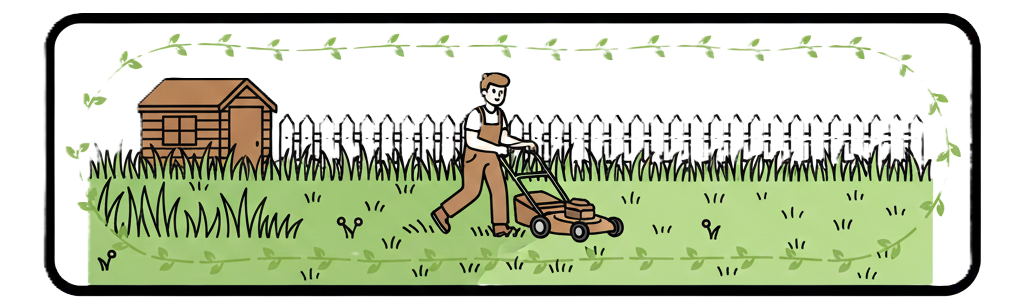
What stewards look for when inspecting:
- Number on sign closest to the main path clearly identifying correct plot number
- Plot being cultivated, with evidence of crops growing.
- Boundaries & path neat & tidy,
- Weeds kept to a minimum.
- Grass to be cut on the paths between plots.
- Rubbish & general tidiness.
Cultivation explained
Within a tenants first year plots must be cultivated thus:
- 3 Months ~25% to be cultivated with crops (First check)
- 5 months ~50% to be cultivated with crops (Second check)
- 9 months ~75% to be cultivated with crops (Third check)
- 12 months and beyond ~75% to be cultivated with crops
This starts from the start date of the tenants agreement. It is expected that in the second year onwards ~75% of a tenants plot is maintained as cultivated (or ready for cultivation outside of growing season).
Non-Cultivation or poor maintenance process
If a non-cultivation letter is received, two weeks are given for significant improvement, unless otherwise agreed with the Secretary/Stewards. Failure to comply will result in the termination of your tenancy.
- A. Tenants failing to meet standards receive a first verbal warning, requiring rectification within 14 days. Failure to comply results in a formal Committee warning with a further 14 days to rectify. Unresolved issues will lead to a final warning and termination of the allotment tenancy 7 days later, as per these rules.
- B. The tenant will be notified in writing to vacate their allotment plot and return their key(s) to the Steward.
- C. The tenant is responsible for any remedial work or waste disposal and any costs incurred by Staple Hill & District Allotments Ltd
- D. Any tenant who has been issued with a previous warning in a 12-month rolling period will immediately be issued with a final warning on the second occasion.
- E. Any tenant who has been issued with two prior warnings within a 12-month rolling period will automatically have their allotment tenancy terminated on the third occasion within this period
- F. Issues relating to a Tenant's gross misconduct such as theft or inappropriate behaviour will be referred to the Committee. In such circumstances, and the allegations are proven, the Committee reserves the right to terminate the allotment tenancy immediately.
- G. In the event of any dispute regarding the interpretation of these rules, the matter shall be referred to the Committee.
- H. For gross misconduct, plot holders have the right to appeal to the Commitee, who will review the appeal and arrange an appeal meeting. The plot holder must submit a written appeal via emailing the secretary and can attend the meeting. The appeal meeting will be run by the Chairperson and comprise Committee members and if required randomly selected plot holders.
- I. Notice served by the Committee on the Tenant will be or emailed or posted to Tenants address or served on personally. Tenants must provide up to date details.
8. Holidays and illness

Notify the Stewards or Committee of longer-term holidays or illness.
If a Tenant is unable to cultivate their allotment due to illness or personal difficulties, the Committee will consider the situation. However, the Committee must ensure plots are managed appropriately for the sake of neighbours.
Tenants must seek assistance (e.g. friends/family/affiliate members) to maintain their plot during long absences to avoid tenancy termination. If Tenants cannot find support themselves, Stewards may find volunteers but this is not guaranteed, alternatively plots can be covered to smother weed growth. If long-term absence is not communicated to the Committee and plots fall into neglect your plot will be passed to someone on the waiting list following the normal process of issuing "Non-Cultivation or poor maintenance process" letters.
9. Discipline and complaints procedure
Discipline on site and when representing the society.
A. If a tenant breaches their agreement (e.g., causing nuisance, obstructing a path, or upon any other complaint), the committee may initiate disciplinary action. The tenant has the right to a reasonable grievance process if they disagree with the committee. Each case will be assessed individually.
B. A tenant is responsible for visitors and helpers on their plot - breaking of rules, poor behaviour, etc will be escalated against the tenant although circumstances will be considered fairly in each case.
C. A variety of interventions will be used.
- Verbal warning
- Written warning
- Discussion meeting
- Formal disciplinary committee hearing and
- Appeal committee
Depending upon the seriousness of the problem one or more stages of intervention could be bypassed. The tenant will be informed of which stages if any have been bypassed.
D. The tenant and the committee should be given the opportunity to talk things through.
E. The tenant will be informed of allegations against them, including evidence which should be provided in advance of the meeting.
F. The tenant has the right to appeal.
G. The disciplinary committee should consist of three committee members; the chair (or Deputy) would normally be the Chairperson, unless a conflict of interest is declared.
(i) The Appeal Committee should be wherever possible composed of three different members of the committee to those who formed the Formal Disciplinary Committee Hearing and chaired by the Chairperson (or Deputy). Where the tenant wishes the chair to be another committee member this is acceptable.
In the case of eviction, the tenant should be given up to 1 month to remove all items, unless otherwise decided by the committee and arrangement for supervised collection made.
H. The Committee believes that every tenant should be treated with dignity and respect whilst at the allotments and not contravene the guidelines of the Equality and Diversity Policy – Available on our website
I. Bullying and harassment of any kind are in no-one's interest and will not be tolerated
10. The Committee
The committee is an elected body that is run on your behalf to serve the needs of both allotment sites and it's community. All positions are voluntary and unpaid - do treat all committee members with the same respect you would show any other person on the allotment.
The committee membership includes:
- Chair Person: Calls/manages meetings, sets agendas, has deciding vote in ties. Must be impartial/fair; may arbitrate disputes. Escalation point if Secretary/Steward cannot assist.
- Deputy Chair Person: Back-up for Chair, including tied vote decisions in Chair's absence.
- Secretary: Manages newsletter/emails, first contact for complaints/questions, issues tenancy agreements, maintains records (waiting list, disputes, etc.), takes meeting minutes.
- Treasurer: Manages accounting/finances, including taking payments and processing deposit returns.
- Stewards / Lead Stewards: Responsible for site-maintenance, showing plots, and inspections. Offer assistance/complaint alternative. Can make on-the-spot decisions/exceptions (e.g., approving a new building), but email follow-up is advised.
- Shop Manager: Runs the Downend site shop with full autonomy (hours, prices, stock payment authorization), reporting to the Committee and membership at the AGM.
- Independents: Offer support to Committee business, have voting rights, and may perform various assisting tasks.
New members can be elected at the AGM or replace resigned/deceased members. Service is limited to five consecutive years unless replacements are unavailable. Only one person per household may serve.
Refer to the constitution for details. Some decisions are made individually (e.g., Stewards' decisions), while others require sub-committee or full committee input, particularly for financial spending thresholds.
Non-committee volunteers
Volunteers may be recruited for numerous roles but are not deemed full committee members and therefore do not hold voting rights. Volunteer tasks can range from occasional assistance with various tasks, to fulfilling regular duties such as helping in the shop or participating in sub-committees. Examples of sub-committees include the Wildlife Committee, which assists with managing wild areas, and Zone Stewards, who support the main Stewards in monitoring the allotment sites.
11. Constitution
By agreeing to become a tenant of Staple Hill & District Allotments Ltd you agree to abide by the rules and regulations set out in this document.
Furthermore you should be aware of our constitution:
- Our constitution https://www.staplehillanddistrictallotments.co.uk/constitution
This document may only be altered by majority vote at our AGM. The document describes what meetings can be called, the levels of membership, the powers of the committee and top-level rules around fiscal responsibilities.
12. Fairness policies
By agreeing to become a tenant of Staple Hill & District Allotments Ltd you agree to abide by the rules and regulations set out in this document.
Furthermore you also agree and should be aware of the contents of our additional policies.
- Safeguarding policy https://www.staplehillanddistrictallotments.co.uk/safeguarding
- Equality and diversity policy https://www.staplehillanddistrictallotments.co.uk/model-equality-and-diversity-policy
Our safeguarding policy broadly covers out that you are responsible for ensuring children and vulnerable adults are properly taken care of and provided for. If you become aware of abuse or risks you should report your concerns of which the policy advises appropriate channels. With the Policy of course being a priority if a crime has been, or is being, committed via 101 or 999.
The equality and diversity policy sets out that we are unreservedly opposed to any form of discrimination on the grounds of Protected Characteristics as defined in the Equalities Act 2010; these are: age, disability, gender reassignment, marriage or civil partnership, pregnancy and maternity, race, religion or belief, sex, sexual orientation. Furthermore discrimination, bullying, harassment, unwanted behaviour of any kind is not tolerated. Tenants and helpers have a duty to report discrimination against via the Secretary. Anyone found to have broken policy may receive a warning or in severe cases have their tenancy revoked and asked to leave. Crime and law-breaking will be reported to the police.
13. Complaints
It is hoped that in the first instance an attempt at informal conciliation facilitated by an independent committee member will be sufficient to resolve most complaints (subject to severity). If a tenant wants to make a complaint to the allotment Committee then they can follow the process described next. The process may be modified in individual cases. Formal complaints should formally be raised in writing via the Secretary or Chairperson.
If the complaint is against the Secretary or Chairperson a complaint, in writing, can be given to another Committee member. All steps to be impartial will be followed.
Complaint Procedure (Stage One)
- A. A complaint must be submitted as soon as possible, and generally within three months of the event. Complaints received after this period will not be considered unless exceptional circumstances (e.g., extended ill-health) are shown.
- B. Complaints should be in writing (email is preferred) and include:
- (i) Your Name, postal address, phone number, and email address. (ii) Full details of the issue, including names, dates, places, a sequence of events, and relevant supporting materials (sketches, photos, measurements). Details must allow someone unfamiliar with the issue to easily understand the complaint. (iii) Names and contact details of willing witnesses.
- C. If the complainant cannot write the complaint, the person(s) considering it may summarise the account provided and verbally verify it for accuracy. Further information may be requested from the complainant.
- D. The Committee will inform the complainant in writing who is considering the complaint and the approximate time frame for a decision.
- E. The person(s) considering the complaint will notify the complainant in writing of their decision.
Complaint Procedure (Stage Two) - if disputed
- A. A complainant dissatisfied with a Stage 1 decision may request a Committee review in writing, stating the reasons, within two weeks of receiving the decision. If unable to write, someone may do so on their behalf. The timeline can only be extended with evidence of exceptional circumstances. The Committee may reject a review request if no new or material information is provided.
- B. The complainant will be informed who will conduct the independent review (someone not involved in Stage 1) and the approximate date they can expect the result.
14. Contacts and links
Contact details
Any enquiries, termination notices, change of address/contact details or alteration requests to be sent to the Secretary at SSALLOTMENTSECRETARIES@GMAIL.COM or advised to the respective Steward to pass on.
Notes to allotment plot holders
These rules are made to help ensure that every tenant gets the best results and enjoyment from their allotment plot. It is in the tenant's interests to ensure that these are adhered to. For information and assistance, tenants are encouraged to join the Facebook page and to visit the Website and seek advice/guidance from other professional gardening bodies where appropriate.
- Our website: https://www.staplehillanddistrictallotments.co.uk/
- Our Facebook group: https://www.facebook.com/groups/1609086755981212
15. Final notes
- Please remember that all Committee roles are voluntary - Please treat the Committee members (along with everyone else on the allotments) with respect. We welcome anyone who would like to volunteer to join the Committee or assist in other ways. Please contact the Secretary if you are interested.
- Remember the Joy of Growing - Ultimately, growing things should be fun! Our rules and complaints processes exist simply to prevent conflict within our community and with external factors like the law and the local council. If you are a considerate person, use common sense, and actively contribute to our wonderful allotment community, you will have no issues. Enjoy!